
Home / Industries We Serve / Breweries, Bars, And Wineries
Coolers for Breweries, Bars, and Wineries
If you run a brewery, bar, or taproom, your cold storage design should reflect your business. American Cooler Technologies designs and manufactures commercial walk‑in coolers that align with your products, workflows, and customer experience, helping teams work more efficiently from opening to last call. Whether you’re storing kegs, wine bottles, or hard liquor, every one of our systems is customized for your specific business needs. Learn more about our selection of commercial beer coolers and wine storage.

Key Takeaways
- Commercial beer coolers and wine‑storage walk‑ins provide stable temperatures, organized layouts, and durable construction that support daily service in breweries, bars, taprooms, and wineries.
- Custom walk‑in coolers can be configured for keg storage, taproom service, or commercial wine storage, giving each operation the right temperatures, access points, and interior layout.
- American Cooler Technologies delivers nationwide solutions with manufacturer‑direct design, installation, and support for commercial beer coolers.
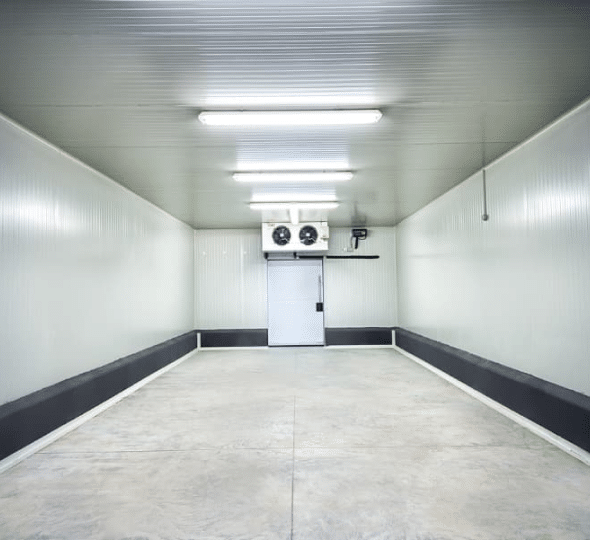
Recommended Configurations for Walk-In Commercial Coolers
Commercial beverage storage relies on efficient storage layouts. For breweries, bars, and wineries, the interior layout must balance storage capacity with accessible pathways to allow staff to rotate product, load kegs, and pull bottles. Therefore, choosing the right configuration is important to streamline service and get the products you need quickly. Our custom walk-in coolers meet the operational needs of busy establishments with:
- Clearances: Walkways should remain open and wide enough for staff to move kegs, cases, or carts safely without blocking airflow or crowding high‑traffic areas.
- Drains: Proper drain placement and floor slope support quick cleaning and help prevent moisture buildup, keeping the cooler sanitary and easier to maintain.
- Slip resistance: Flooring options or surface treatments that improve traction reduce the risk of slips during stocking or high‑volume service, especially when condensation or ice may be present.
Proper placement of your cooler is also important. Keg coolers should be in the back-of-house area, while taproom and serving coolers need to be accessible in the front of house.
Typical Cooler Sizes for Breweries, Bars and Wineries
Nominal Size L x W x H
- 8′ x 8′ x 8′
- 8′ x 8′ x 8′
- 8′ x 8′ x 8′
- 8′ x 8′ x 8′
Actual Exterior Size L x W x H
Actual Interior Size L x W x H
- 7′-4″ x 7′-4″ x 7′-8″
- 7′-4″ x 7′-4″ x 7′-8″
- 7′-4″ x 10′-10″ x 7′-8″
- 7′-4″ x 13′-4″ x 7′-8″
Temperature and Humidity Basics for Product Quality
Alcohol products require specialized storage to provide consistent, great-tasting drinks. Consider these guidelines:
Beer Storage Considerations
Beer is typically kept colder to protect freshness and maintain flavor, so back‑of‑house keg coolers and taproom serving coolers run at lower setpoints designed for frequent access and quick recovery. Our walk-in keg coolers are typically kept at 36°F to 38°F, providing a cold, stable environment that protects carbonation and keeps draft beer tasting fresh, even during rapid rotation and frequent access.
Our serving coolers operate at 38°F to 42°F, ensuring smooth, consistent pours while giving staff access to cans, bottles, and frequently served products during peak hours.
Wine Storage Considerations
Commercial wine storage requires steadier, gentler temperature control than beer or draft systems. Wine performs best in a 45°F to 55°F environment with smooth airflow and stable conditions that prevent large temperature swings, helping preserve integrity, bouquet, and long‑term quality.
Energy Efficiency and Operating Cost Controls
Energy-efficient beverage coolers maintain temperature more easily and help lower your overall energy bills. Features of our models that support energy efficiency include:
- Insulated panels: We use 3.5-inch panels for above‑freezing rooms and 5-inch panels for deep‑cold spaces to reduce heat gain and speed recovery after door openings. Panels up to 46 inches wide lower-seam count, while tongue-and-groove joints, cam locks, and continuous gaskets create a tighter seal for steadier temperatures and fewer compressor cycles.
- Steel-enforced doors: Our doors feature heavy‑duty hinges, matches, and optional threshold or frame heaters to keep the seal performing after thousands of cycles, reducing frost at the frame.
- Finishes, lighting, and traffic habits: Our 26‑gauge embossed galvanized steel is easy to clean, while efficient lighting enhances visibility without extra heat.
By having energy-efficient coolers in your business, you have more control over your operating costs.
Installation Planning and Timelines
Preparing your space correctly ensures professional installation of our commercial walk-in coolers. You should:
- Confirm that the floor is level and strong enough to support rolling kegs and daily traffic
- Ensure ventilation clearances and electrical connections are ready before installation
- Keep access routes open for panel delivery and future keg rotation
This helps set you up for a successful installation.
Why Choose American Cooler Technologies for Commercial Walk-In Coolers?
Owners of bars, breweries, and wineries can depend on American Cooler Technologies for high-quality commercial wine storage systems and beer coolers. Our products deliver stable temperatures, reliable airflow, and organized layouts for wineries, bars, taprooms, breweries, and other beverage‑driven industries nationwide.
Each unit is built and shipped within three days, with quick order turnaround. As your business grows, manufacturer‑direct access to spare replacement parts or doors helps keep your commercial cooler operating efficiently with minimal downtime. Whether you’re planning a new wine room or upgrading an existing beer cooler, contact us or request a quote today.
FAQ About Commercial Beer and Wine Coolers
Can you build a customer-facing serving cooler for a taproom?
Yes, we build customer‑facing serving coolers designed for taprooms, with organized product displays and door styles that support quick access while maintaining consistent temperatures.
How should a keg cooler be laid out to ensure safe loading and optimal speed?
A keg cooler should include clear floor paths, reinforced flooring, and wide access points to allow staff to move kegs safely and rotate stock quickly during service.
What ongoing cooler maintenance should a brewery plan for?
Most operations benefit from routine cleaning of gaskets, door seals, and interior surfaces, as well as regular temperature checks. Some environments may require more frequent hardware inspection to maintain consistent performance.


Testimonials
Trusted by Thousand of Clients
Emma Hart
Eddie Johnson
